 In today's metal climate there is an endless swirl of styles, genres, and sub-genres
for metalheads to sink their teeth into, and as such it can become overwhelming for
today's generation of upstarts to enter the fray, understanding the complexities and
derivatives from what metal has evolved from and into. Hence, there is a rebirth afoot, a
back to basics approach if you will, a desire to create good old-fashioned, straight
ahead, no nonsense heavy metal, and lying at the core of this 80's traditional metal style
is the New Wave of British Heavy Metal, with the unwieldy acronym NWOBHM (of which I
personally always pronounced it "new bomb"). Diving into the LP's and 7"
singles of that day will unearth an endless, multi-colored, vinyl stream of names, many of
which were never heard from again; releasing a song or two, then morphing into bigger
names or simply calling it quits, leaving historians and music buffs a battlefield's worth
of splintered and shattered platters to rummage through, dissecting the worthwhile from
the worthless. One such band perched high atop the worthwhile category would be Savage.
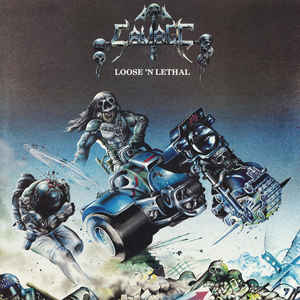
Hailing from Mansfield, UK, these blokes unleashed a vicious, 8-song LP entitled Loose 'n'
Lethal, a guitars-in-your-face 1983 recording that turned several thousand in sales at the
time, especially overseas (it was the highest selling import in the US that year!). These
days, though, few seem to remember the band, who called it quits 2 years later after
1985's Hyperactive release. So what happened, and why blow the dust off?
In today's metal climate there is an endless swirl of styles, genres, and sub-genres
for metalheads to sink their teeth into, and as such it can become overwhelming for
today's generation of upstarts to enter the fray, understanding the complexities and
derivatives from what metal has evolved from and into. Hence, there is a rebirth afoot, a
back to basics approach if you will, a desire to create good old-fashioned, straight
ahead, no nonsense heavy metal, and lying at the core of this 80's traditional metal style
is the New Wave of British Heavy Metal, with the unwieldy acronym NWOBHM (of which I
personally always pronounced it "new bomb"). Diving into the LP's and 7"
singles of that day will unearth an endless, multi-colored, vinyl stream of names, many of
which were never heard from again; releasing a song or two, then morphing into bigger
names or simply calling it quits, leaving historians and music buffs a battlefield's worth
of splintered and shattered platters to rummage through, dissecting the worthwhile from
the worthless. One such band perched high atop the worthwhile category would be Savage.
Hailing from Mansfield, UK, these blokes unleashed a vicious, 8-song LP entitled Loose 'n'
Lethal, a guitars-in-your-face 1983 recording that turned several thousand in sales at the
time, especially overseas (it was the highest selling import in the US that year!). These
days, though, few seem to remember the band, who called it quits 2 years later after
1985's Hyperactive release. So what happened, and why blow the dust off?
Well, the late 70's and early 80's saw an explosion of metal bands in England, which was a
swinging response to the mercifully short birth and death of punk, and by the time 1983 rolled around, the love for this surge had waned; Metallica put out Kill 'Em All, and
folks were clamoring for a new style to take hold, which of course was thrash. Bands
already established would be fine, but any newcomers to the scene were in need of some
sort of additional help. For fellow countrymen Grim Reaper, that help came in the form of
heavy video rotation for their song "See You In Hell". For others, Lars and his
Metallicohorts were a huge catalyst, although the appreciation came some years later in
this case, Diamond Head being the biggest recipients of their covered tunes entering into
the metal psyche by way of that band. Incidentally, Metallica did cover a couple of Savage
songs in their earliest of days, and Let It Loose even appeared on the 1982 Hit The Lights
demo, but unlike Diamond Head, Holocaust, and Blitzkrieg, it never made it onto an
official release, thereby not receiving the inevitable exposure the Metallidudes'
reputation later offered. Of course, label management goes a long way into launching a
bands career as well, and Loose 'n' Lethal being the first full-length by a single artist
on the then new Ebony label didn't help, as the company was rumored to have severely
mismanaged the band. Ironically, it was Ebony who licensed Grim Reaper to RCA in America,
all the while allegedly turning down similar major label offers to Savage, unbeknownst to
the group.
The band was initially started in 1976 by 15 year old bassist/vocalist Chris Bradley,
whose name was inspired by the song "Savage" off Judas Priest's Stained Class
album, but initially they went nowhere. Chris retooled in 1979, bringing aboard guitarists
Andy Dawson and Wayne Renshaw, and solidifying the lineup with drummer Mark Brown. The
fellas then began recording demos, and a two-song appearance on Suspect Records split
(compilation) album Scene of the Crime in 1981 garnered them some notoriety, but it took
two more years to land a record deal and get the debut out. By this time, Motorhead had
already released Overkill and Ace of Spades, Saxon were exploiting songs from Wheels of
Steel, Strong Arm of the Law, and Denim and Leather, Iron Maiden had issued their S/T,
Killers, and had already broken in Bruce-bruce via The Number of the Beast, Def Leppard
had driven On Through the Night and landed High ‘n' Dry, and Judas Priest had long
been cemented at the forefront of the movement. The list of now classics from about 1980
to 1982 goes on and on, so our Johnny-come-latelys just didn't quite arrive in time, and
without some additional outside karma, Savage imploded, but not before releasing a
barnburner of an album.
Loose 'n' Lethal was actually a bit of a hit at the time, and punters were lapping up the
mammoth guitar sounds of the release, which really came by happy accident, as the young
band and producer had limited knowledge of proper recording techniques, unwittingly
letting loose a torrential barrage of guitar tones, though the release remained overall
clear, vocals up front, drums and bass separate, yet present and full of punch. The album
opens with the aforementioned "Let It Loose", the band's staple from the Scene
of the Crime comp. and best track, as it's balls out, speed-driven riff drives to the
center of the cerebrum and sets up shop, never to leave. "Cry Wolf" comes next,
a laid-back bit of malaise centered on a slightly generic guitar riff, but the song is
buoyed by attitude and a ripping guitar solo that fades out at the end; the lyrics of
which are centered on the unruly mix of alcohol and depression and its obit ultimatum.
"Berlin" tears through the speakers next with a glorious guitar-line that could
be a poster-riff for the NWOBHM movement, again things fade out with a solo, this one more
or less just kinda tagged on, versus the shredding outro of the previous track.
As
mentioned earlier, the band had two tracks appear on the Scene of the Crime sampler, and
the fourth song, "Dirty Money", is the other one to reappear here. With it, the
guitars simply carry a galloping riff ala Def Leppard's "Wasted" throughout the
entire song, heralding in a thrashy and trashy monomaniacal drum barrage come chorus time,
attaching itself to the main theme before things return to the verse. Up next we get
"Ain't No Fit Place", again, corner-stoned by a riff that is perfect NWOBHM and
goes for miles. The track opens with some quiet, clean, introspective tones, setting
itself up to be the most epic on the record, and its mid-paced tempo is set to perfectly
reflect the combustibility of living on the poorer side of town, life in the dregs, and
the inevitable affect it has on man's mental stability. "On the Rocks" follows,
again, a chugging, genre-defining main riff that morphs into a slightly poppy accentuation
come the chorus, but scorching harmonic leads sear the cerebral cortex, regrettably again
simply fading out instead of building into a grandiose conclusion; one gets the feeling
the band were none to sure as how to wrap their songs up at the end, opting for the ease
of artlessly fading things out. "The China Run" is the second to last track,
featuring galloping triplets throughout, the highlight being the somewhat extended solo in
the middle of the song. "White Hot" concludes the approximate 35 minute foray
into the band's molten-minded brand of metal, a track righteously disclosing the live
relationship between fan and band and all the blood, sweat, and abusive tolls our beloved
form of musicality takes.
With one of the best Mad Max derived album covers of any era to boot (created by none
other than longtime journo and renowned metal author Gary Sharpe-Young), Savage's Loose
'n' Lethal was a veritable feast for the senses, an album that is looked fondly upon by
many as one of the defining representations of the NWOBHM. Subsequently, the band
re-emerged with an album called Holy Wars in 1995 (without second guitarist Wayne Renshaw
and different personnel rotating behind the drum kit) to lukewarm response, but
nevertheless have carried on to this day, the permanent fixture of guitarist Andy Dawson
and founder Chris Bradley still carrying the Savage name on to the faithful, playing out
when they can, affording today's generation a chance to experience a little bit of what
the NHOBHM era was like.
As stated earlier, there is literally a mountain of classics from this era, but finding
the more obscure albums so aurally complete is the real challenge. There are plenty of
albums with two or three, maybe even a half-dozen songs that truly relate what the genre
had to offer, but there are very few so markedly realized from start to finish. Therefore,
Loose ‘n' Lethal is aligned right in there with any of the stalwarts from the era,
ones that defined what the genre was all about, and it can still rattle heads to this day.
STAFF APPROVERS:
IcedMojo: "Savage, a NWOBHM captured the pure essence of metal. The vocal
stylings of Chris Bradley coupled with twin guitars along with the speedy druming of Mark
Brown, this is one album that stands the test of time. Really great album chalked full of
groove happy tracks that simply will gallop from your speakers. Check it out, you won't
regret it!"
David Loveless: "First of all, where the hell have I been? This album came out
in 1983 and I'm just hearing it for the first time in 2009. Plain and simple, this album
ROCKS from start to finish. A definate heavy metal masterclass of it's time, Savage pushes
the boundaries of NWOBHM on this one. A little bit of Maiden mixed with a little bit of
Priest, and a whole lot of melodic (but heavy) riffs, Loose 'n Lethal definitely stands
the test of time, as it sounds just as good today as it probably did 26 years ago. I'm
sure there are a slew of bands today that wished they sounded this good!
STAFF DISSENTERS:
Frank Hill: "This is one I hadn't heard before. Initially, the speed and the loud, highly
distorted guitars hit you with with a solid brick of throwback excitement. I like the raw
sound of the rhythm guitars, but the production quality is really bad and it really shows on vocals, drums and
'esp guitar leads. Given todays technology, you'll hear demos and cds from most local
bands that come across sounding better. A new mix may have helped. I would still call it NWOBHM to this day,
so it isn't genre-defying. I hear a little Diamond Head in there and some Scorpions, but overall
only the title track stands up with repeated listens for me."
Eric Compton: "Savage is a really interesting band from the NWOBHM scene. Underground
fans flock to their debut release, "Loose & Lethal", and praise its tone and
fluid twin guitar melody. Big band Metallica covered one of their cuts on an early demo.
You can always leave it to Metallica to find the most uninspired bands of the new wave
genre and make them famous for the late 80s mopheads (see lackluster Blitzkrieg and
Diamond Head). I'm a huge fan of NWOBHM as well as the Ebony record label that released
the album, however I personally have never cared for Savage.
"Loose & Lethal" has such high treble that it "sounds" flashy even
though the riffs are simple and very basic in nature. The band obviously was a huge fan of
Terrible Ted and used a lot of the same hooks and licks that Nuge laid in the 70s. The
band also uses early Scorpions and Thin Lizzy (see "Cry Wolf" and its rip of
Thin Lizzy's "That Stuff" chorus) on its riff resume.
The cover art was crafted by the same artist that worked with Holland, Quartz, Blade
Runner, and Chateuax among others, all of which were popular new wave bands, some even on
the Ebony label.
For me personally I found Quartz (1979), Blade Runner (1984), Holland (1984), and Tokyo
Blade (1982) much more innovative and unique than this standard new wave entry from '83.
For fans looking for some real flashy polish check out Proud's "Fire Breaks The
Dawn" from '84. Sheer power!"